30-day return
 Free delivery from 300 PLN
 Shipment within 24 hours
 Contact


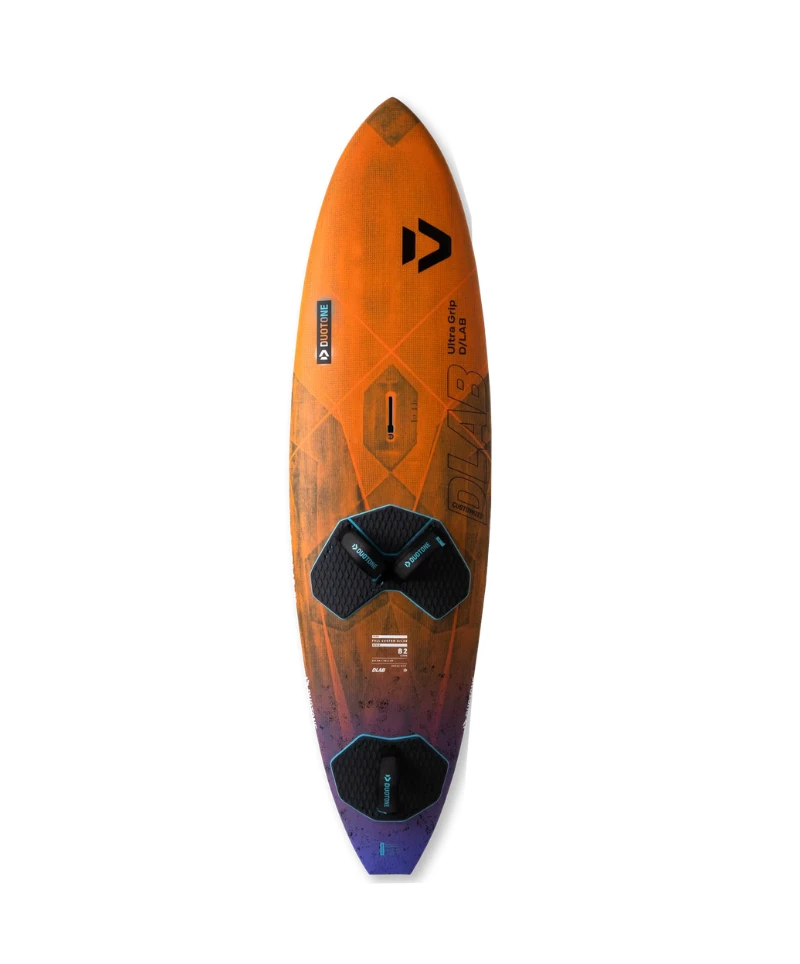
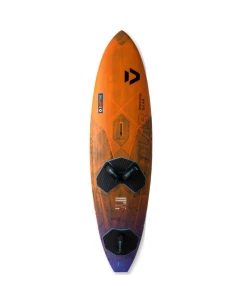
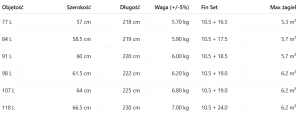

Beyond your imagination. Built like a top-tier custom board, designed using our own AI_BOARD_3D software, which lets us integrate remarkably complex shaping tasks. The GRIP (Tri) D/LAB CUSTOMIZED is truly unlike anything else and will take your wave riding to a higher level!
Just as we achieved with the SUPER_HERO D/LAB sails, our goal was to create true game changers in the new wave board lineup.
What we learned during the development of the SUPER_HERO D/LAB is that you have to work on every aspect to really achieve a decisive improvement.
Moving from the industry-standard semi-custom technology to our exclusive FULL CUSTOM PRODUCTION became the foundation for everything that followed (details below in TECH AND SHAPE DETAILS). This technology took the weight-to-strength ratio to a whole new level. And it finally let us build every single prototype in the factory the same way we've been doing with sails for over 30 years. Because the best prototype has no value at all if it can't be reproduced, or if it differs from the final product because of different materials, processes or weight.
To achieve a similar leap forward in 3D design, we decided to build our own CAD program. Compared to the industry-standard Shape3D, our DT_BOARD_3D program is far more precise and lets us handle even super-complex shaping tasks, such as the completely new SYNCED CURVES CONCEPT.
Our main goal was to create shapes with the widest possible range of use, that are easier (less tiring) while still being more radical on the wave.
Essentially we wanted to create a more stable platform that works great when getting going and passing through whitewater. But at the same time we wanted the boards to turn even more radically down the line, meaning combining traits that normally can't be combined.
Here are the 3 main shape elements our team has developed over the past 2.5 years (further details below in TECH AND SHAPE DETAILS):
-
STABLE YET RADICAL CONCEPT
Our wave boards are 1-2 cm wider than most other boards.
The extra width gives a more stable platform. This makes our wave boards as stable and energy-saving as a board 5 liters bigger while drifting/sailing and passing through whitewater.
Most importantly, the extra width increases the outline's curve. This improves maneuverability and makes the board turn as radically as a board 5 liters smaller.
The result is an unmatched wide range of use -
3-STAGE ROCKER
Unlike a typical continuous rocker line, our whole shape concept is based on a segmented rocker line. This comes from the fact that the bottom turn and top turn are two completely different maneuvers. While you initiate the bottom turn more with your front foot (depending on wave size), the top turn is performed entirely on the back foot. This shift in position is the biggest challenge, especially when learning wave riding - and with our 3-STAGE ROCKER it becomes much easier.
The straight rocker section between the front and back straps creates a super stable position/platform, so you're perfectly synced with the board both while getting going and while riding the wave through the transition between the bottom turn and top turn.
The nose rocker starts just before the front straps, which helps engage the front part of the rail when leaning forward into the bottom turn.
KICKSTARTER TAIL: the tail rocker behind the back strap stays very moderate right up to the last 4-5 cm of the tail, where it transitions into a progressive tail-kick. This tail-kick creates the ideal water release and, combined with a flat rocker line, delivers acceleration like a kickstarter as soon as you press lightly with your back foot. Additionally, the tail-kick of course allows for super tight top turns during an aggressive back-foot snap. -
SYNCED CURVES CONCEPT (rocker >< outline >< rail)
The outline, rocker and rail shape are the 3 key elements that determine how a board handles and performs. In every rocker and outline there are areas with more and less curvature. The same goes for the degree of rail curvature, which also changes significantly. To prevent these 3 curves from working "against" each other, syncing them is the top priority. This means that in areas with more rocker curvature, the outline also has more curvature, and the rail has a bigger bend - and vice versa.
Increased outline curvature, nose rocker and rail curvature around the mast track make it easier to initiate the bottom turn (initiated with the front foot)
Increased outline curvature, tail rocker and rail curvature behind the back strap for more radical top turns (initiated with the back foot)As far as we know, this complex 3D task can only be handled by our own AI_BOARD_3D software.
We started testing this concept on existing boards, and the improvement on each of them was so huge that we brought this design feature to all our 2026 boards.
Both GRIP and ULTRA GRIP were designed as World Cup Wave boards, to meet the demands of the world's best riders in every condition and spot around the globe. Here are the differences:
-
A. GRIP
Focus: European waves >< logo-high groundswell
Ideal for: Klitmøller, Canarias, North Sea, Kanaha
-
B. ULTRA GRIP
Focus: groundswell >< windy European waves (not for onshore conditions)
Ideal for: Maui, Capetown, Brittany, Cabo Verde, Ireland, Chile, Mauritius
Finally, both the ULTRA GRIP D/LAB and GRIP D/LAB can be ordered in a Quad or Tri fin box configuration.
The Tri configuration (GRIP all sizes, ULTRA GRIP from 82 liters up): ideal for side/side-on conditions, since it lets you ride more vertically and looser through turns. Keep in mind that in bigger waves the Tri configuration requires a more decisive, upright riding style.
The Quad configuration (all sizes): ideal for side/side-off conditions and/or strong current, since it provides more hold, especially for lighter riders and on smaller boards. Note: not ideal in onshore conditions.