 30-day return
 Free delivery from 300 PLN
 Shipment within 24 hours
 Contact


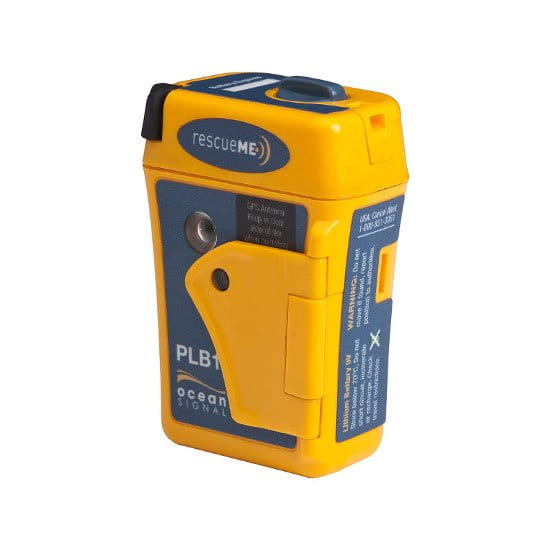
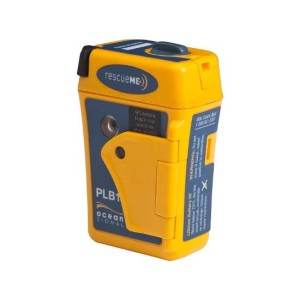

Ocean Signal 2024 PLB1 Personal Radio Beacon
Shipping costs are not included in the price.
Shipping costs are not included in the price.
Select product variant:
Individual variants may differ in price
Product code: SUB180454
Opis
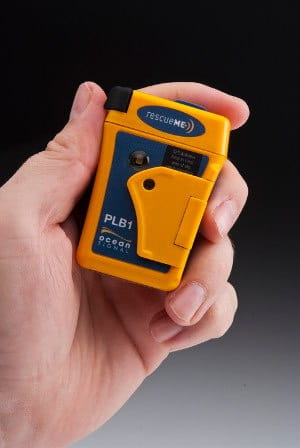
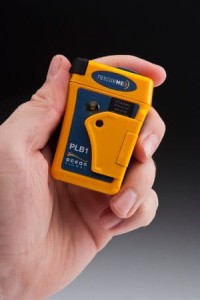
The rescueME PLB1 is the world's smallest Personal Locator Beacon (PLB)
-
30% smaller than other devices in its category
-
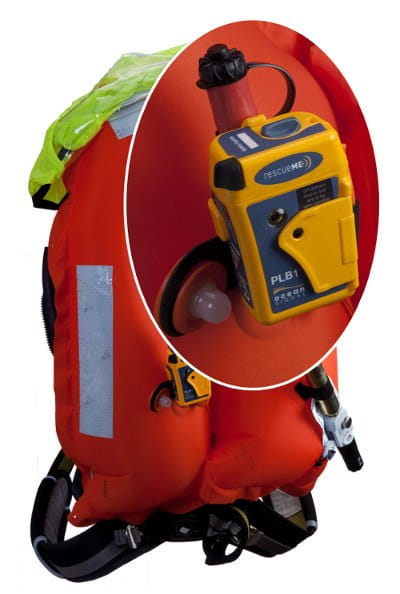
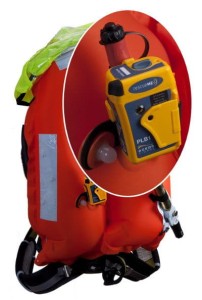
Easily fits into a life jacket
-
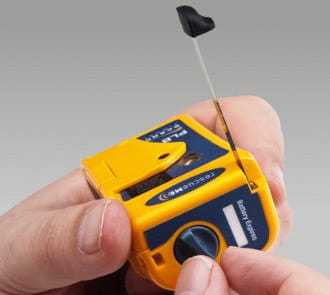
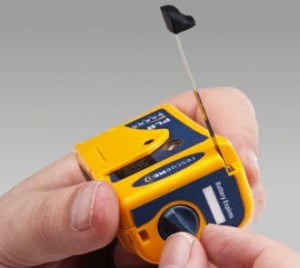
Retractable antenna
-
7-year battery life
-
7-year warranty
-
High-brightness strobe light >1candela
-
66-channel GPS receiver for fast positioning
-
Unique mounting clamp and optional float lanyard
Whether you are at sea or on land, the rescueME PLB1 provides added assurance that emergency services will be notified of an incident shortly after you press the button.
The rescueMe PLB1 can be operated with one hand in the most difficult situations. The activation button is located under a simple, spring-loaded protective flap, protecting it from accidental use.
rescueME PLB1 works with the only officially recognized global satellite network dedicated to search and rescue services (operated by the Cospas Sarsat system). Because it is maintained by governments, there are NO fees for its use.
Once activated,rescueME PLB1 transmits your position and ID to the Rescue Coordination Center (RCC) via a satellite link. The emergency services are quickly informed of your accident and are regularly notified of your current position.
Registration radio beacons
After purchasing a radio beacon, it must be registered at the Civil Aviation Authority (www.ulc.gov.pl)
Registration of the ELT-EPIRB-PLB 406MHz distress signal transmitter in Poland takes place at the request of the owner/user, on the basis of the registration form together with the following statements:
- consent to the processing of personal data;
- failure to register the radio beacon in the records or register kept by the competent authority of another country.
The correctness of the data provided in the form and statements must be confirmed by the signature of the owner/user of the distress signal transmitter.
Before registration, the owner/user of the distress signal transmitter must have a valid radio permit or apply for a radio permit from the Office of Electronic Communications.
The completed and signed form and declarations should be sent to the following address:
Civil Aviation Office, Air Navigation Department, ul. Marcina Flisa 2, 02-247 Warsaw
with the note: Form-Beacon 406MHz
The registration form and the necessary information are available at:
www.ulc.gov.pl/pl/zegluga-powietrzna/poszukiwanie-i-ratownictwo/rejestracja-beaconow-406mhz
The radio permit application form can be downloaded at:
https://bip.uke.gov.pl/download/gfx/bip/pl/defaultaktualnosci/125/3/2/plb_wniosek_osobisty_nadajnik_ratunkowy.rtf (RTF file) or https://bip.uke.gov.pl/download/gfx/bip/pl/defaultaktualnosci/125/3/2/plb_wniosek_osobisty_nadajnik_ratunkowy.pdf (PDF file)
More information:https://bip.uke.gov.pl/jak-uzyskac-rezerwacje--poszkodie--zewodnie-tresc/powodnia-plb,3.html
Helpful tips when filling out the PLB1 radio beacon registration form
Beacon Manufacturer: Ocean Signal
Model: rescueME PLB1
Serial Number: [The serial number can be found on a sticker attached directly to the beacon and on a sticker attached to the side of the beacon packaging]
COSPAS-SARSAT Type Certificate Number: [The current three-digit number can be found on the inside of the beacon flap/door in the CS TAC section. The certificate for printing is available at the bottom of the pagehttp://oceansignal.com/products/plb1/]
Radio license number: [enter the radio license number granted by the Office of Electronic Communications here]
Beacon type: [check: PLB]
Activation type: [check: Manual activation]
Purpose: [select whether the radio beacon will be used on land, at sea or in the air - more than one item can be selected]
Transmitting frequencies: 406MHz and 121.5MHz
How does the PLB1 work?
The PLB1 beacon is best attached to a life jacket or belt. In case of danger, extend the antenna (making sure it is vertically upwards), then press the red button under the protective flap for 1 second. The green diode will flash, which will indicate that the radio beacon has been activated. At certain intervals, the strobe light will also flash, which will help locate the position at night or in conditions of limited visibility. After activation, the radio beacon will wait 50 seconds, collect its position data via 66 GPS channels and transmit it to the rescue center via the COSPAS-SARSAT system. Rescue units will contact the person indicated in the radio beacon registration form as the contact person to confirm the identity of the person calling for help, then they will start the rescue operation. Once activated, the beacon will transmit updated position data for 24 hours.
For more details on activating, deactivating and testing the PLB1 beacon, please refer to the enclosed user manual.
Technical specifications:
| 406MHz Satellite transmitter | |
|---|---|
| Frequency | 406.040MHz |
| Tolerance | ±1kHz |
| Stability | 2ppb/100ms |
| Output Power | 5 watts (nominal) |
| Modulation | Phase ±1.1 radians (peak) |
| Issuance designation | 16K0G1D |
| Encoding | Two-phase L |
| Data transfer rate | 400bps |
| Duration | 520ms |
| 121.5MHz Homing signal | |
| Frequency | 121.5MHz |
| Stability | ±50ppm |
| Output Power | 25-100mW PERP |
| Modulation | Swept Tone AM |
| Issuance designation | 3K20A3X |
| Depth modulation | 85-100% |
| Sweep range |
If you've added a review and it doesn't appear on the list, it may be pending moderation.
|
 Log in with Facebook
 Log in with Google